Skip to content
ZENNEX Consulting

AI software · Singapore

An AI-native financial intelligence platform for financial advisers.

We designed and built 1965 Intelligence with AI at its core. It reads client records, imports spreadsheets and answers questions with sources. The adviser approves every change.

The project in numbers

in client assets, managed by the adviser behind it1965 Intelligence, 2026
S$1.5M+
planning tools on one subscription1965intelligence.com, October 2026
6
AI models, grounded in Singapore planningrouted by question: fast, standard, deep
3
or less per cited answermeasured, October 2026
US$0.03

The client

Advisers had the clients. Their tools were spreadsheets.

1965 Intelligence was started by a practising Singapore financial adviser, managing more than S$1.5 million in client assets, who saw how much of the job went into spreadsheets, manual calculations and slides instead of clients. The brief was a platform that does that work, with AI at its centre rather than bolted on.

That raised the bar. Client records are personal data. A wrong figure in front of a client is a compliance problem, not a typo. So the AI had to read every client's records without oversharing them, answer with sources, and never change a record on its own. And every screen had to hold up when shown to a client, live, in English or Chinese.

At a glance

Client
1965 Intelligence
Industry
Software for financial advisers
Users
Advisers and advisory firms, Singapore
Founder
A practising adviser with S$1.5M+ in client assets
Platform
Web app and API on AWS, AI grounded in Singapore planning
What we did
Product design, full-stack build, AI architecture, releases
Engagement
Ongoing

Why an intelligence platform, not another calculator.

  1. 01

    It knows the clients

    Problem: A client's picture is split across insurer PDFs, CPF figures and the adviser's own spreadsheet.

    Solution: 1965 pulls it into one record the AI can read, so a question about a client is answered from everything on file.

  2. 02

    It knows Singapore

    Problem: General AI misreads local terms, and rates, caps and reliefs change every year.

    Solution: Every request carries a Singapore planning glossary, and every figure comes from a table a person has checked.

  3. 03

    It knows its limits

    Problem: An AI that guesses, or acts alone, is a liability in a regulated job.

    Solution: It cites its sources, says "not verified" when it can't, and changes nothing without the adviser's approval.

The build

What we built.

Eight pieces of work. Each starts with a problem advisers had, then shows what we built to solve it. The screens are the live product, filled with invented sample clients.

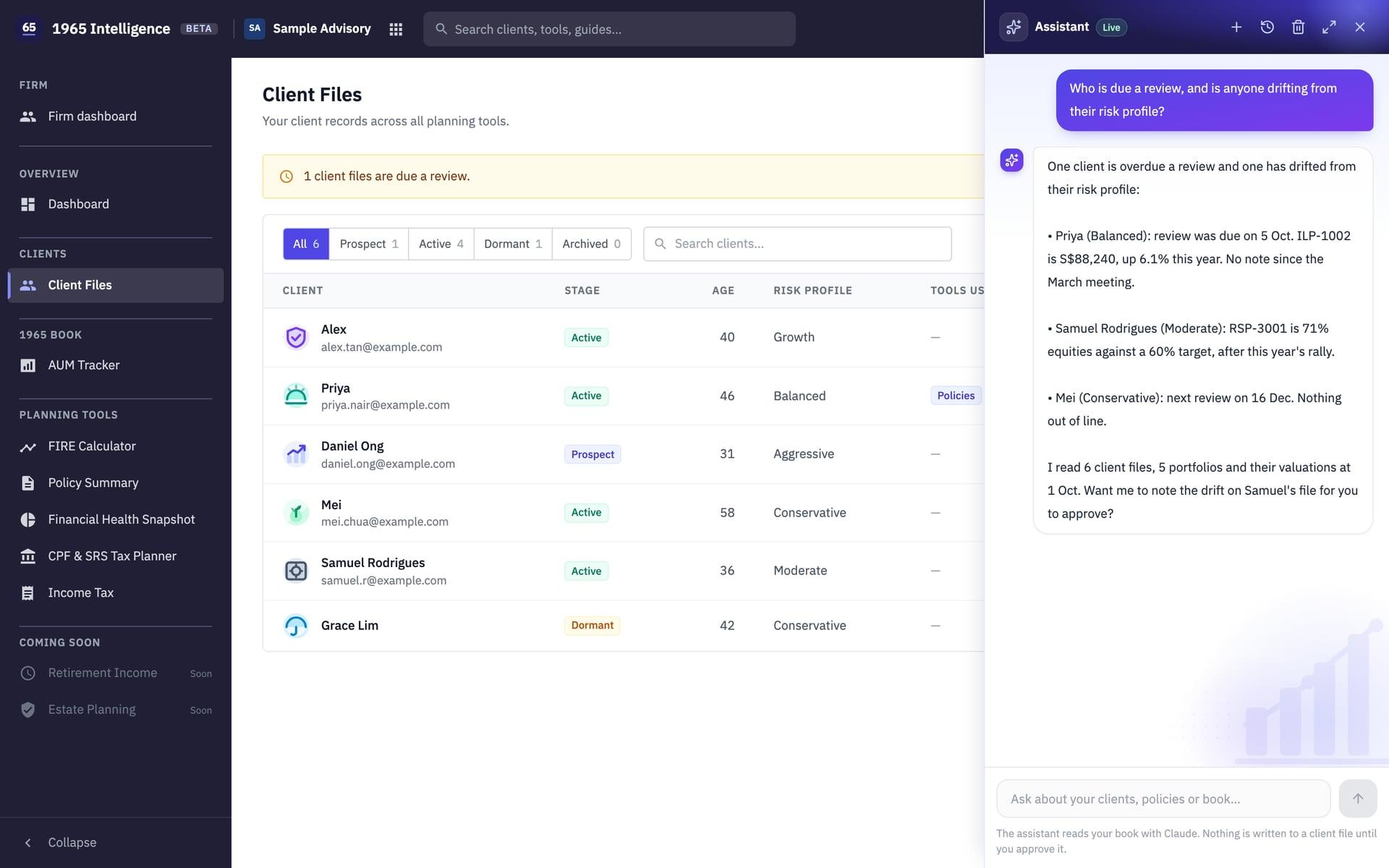
  1. Client files with the assistant panel open beside them, using sample clients
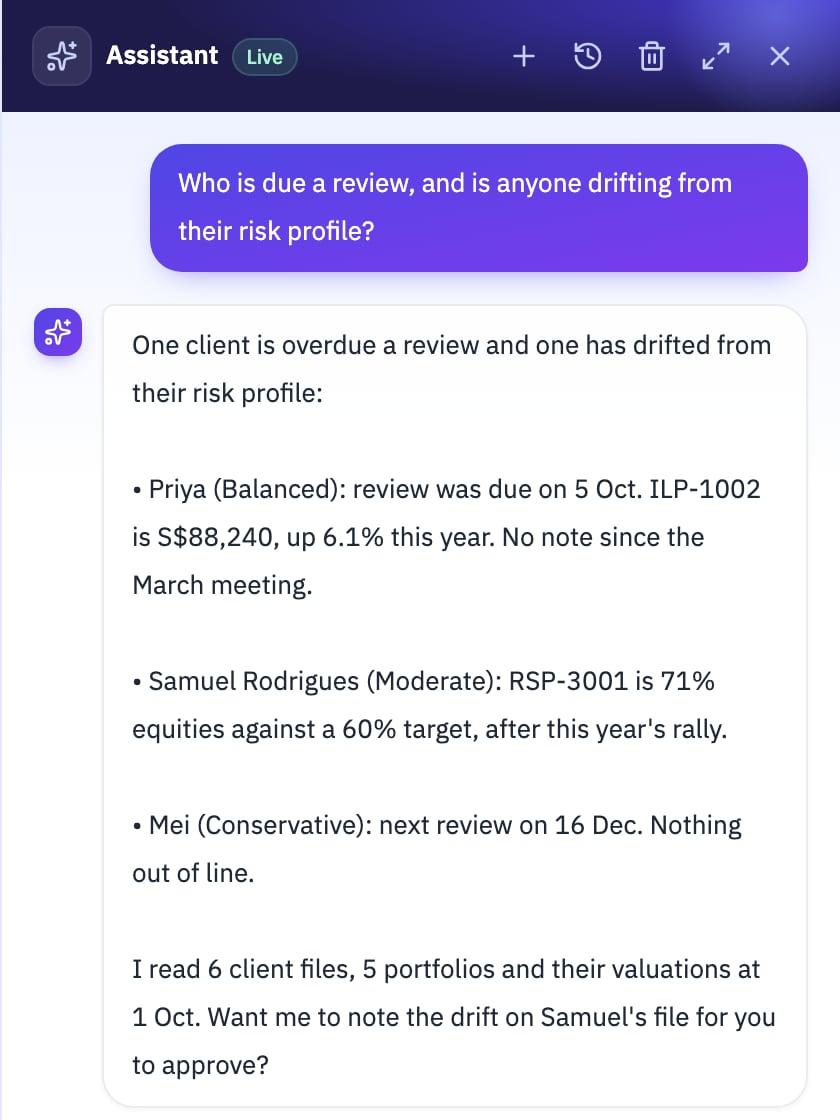
    The assistant naming one client overdue a review and one drifting from their risk profile, and the records it read

    01 / 08AI assistant

    An assistant that knows every client

    Problem: Preparing for one review meant opening five screens and a spreadsheet.

    Solution: Advisers ask in plain words: who is due a review, who has drifted. The assistant reads the client files, portfolios and valuations, and answers naming what it read.

    • Reads only the adviser's own clients
    • Conversations kept and picked up later
    • The deep model, with prompt caching
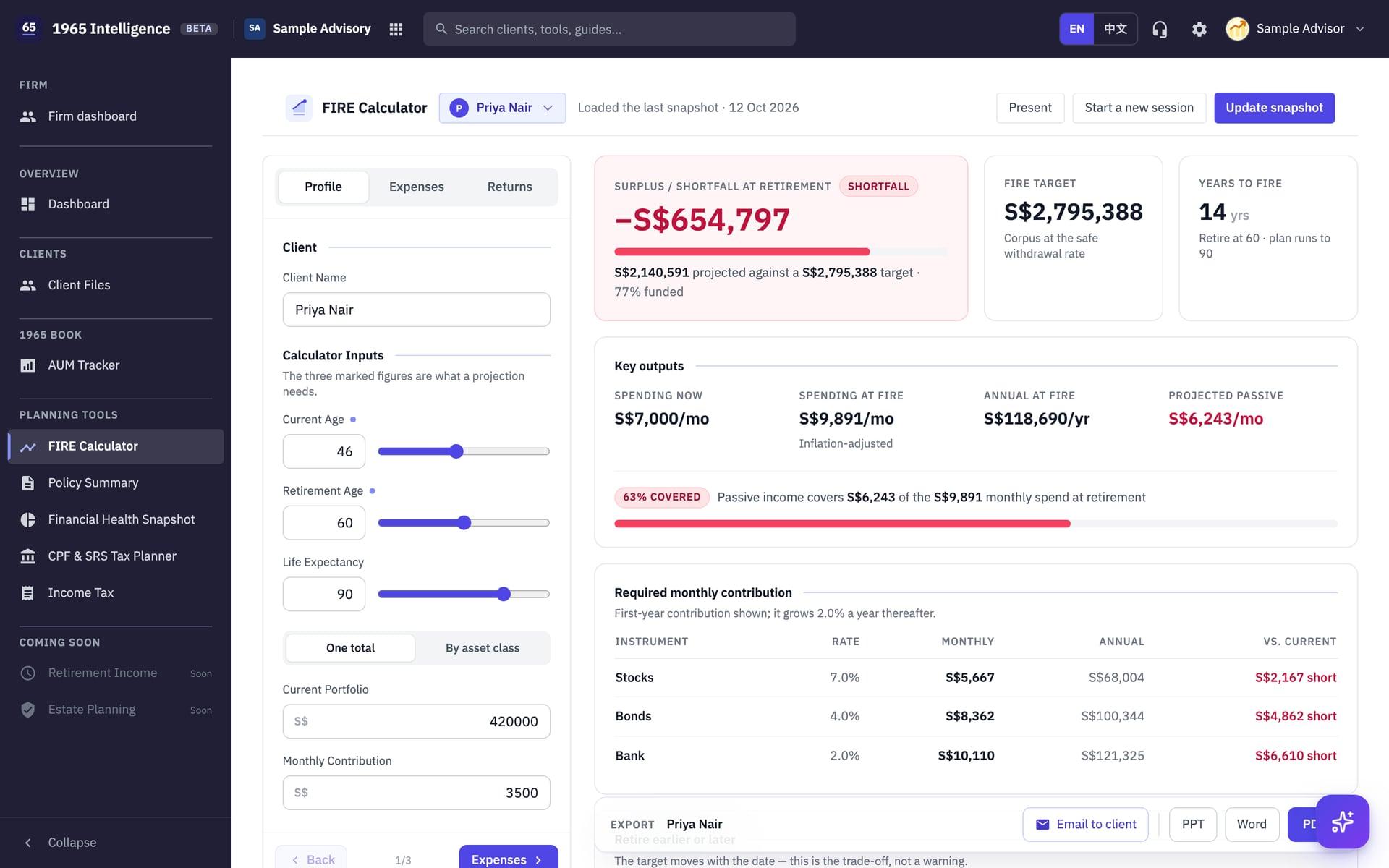
  2. The FIRE calculator filled in for a sample client, showing a shortfall at retirement
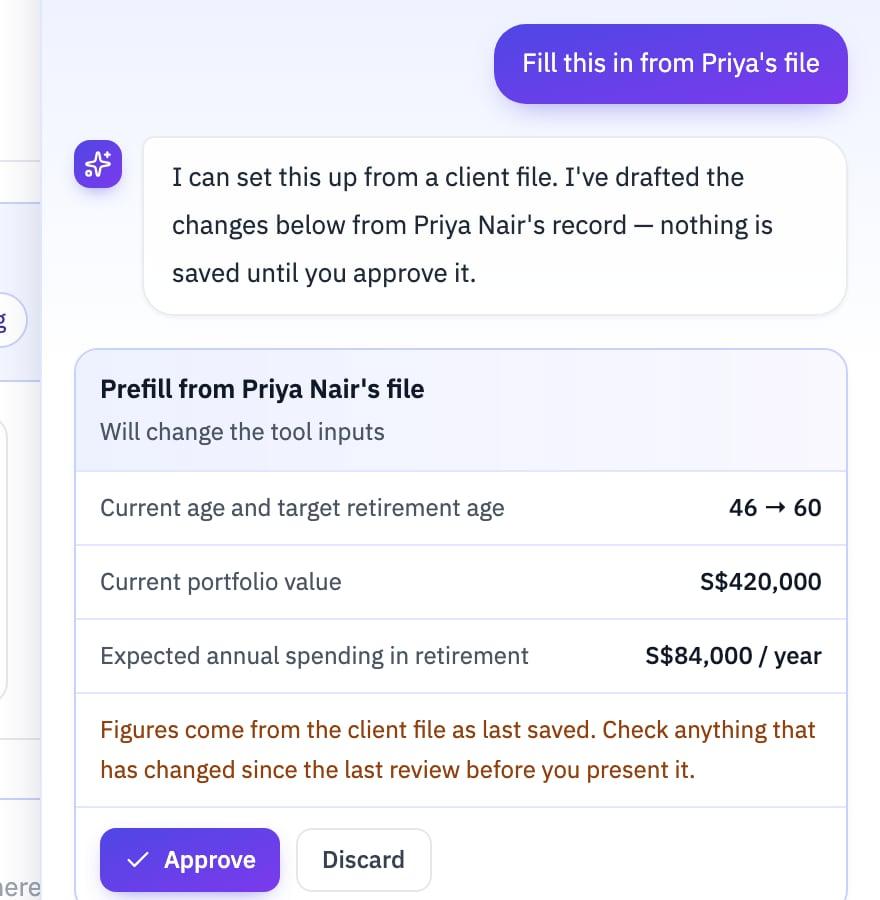
    A proposed change to prefill the calculator from the client file, with Approve and Discard buttons

    02 / 08AI assistant

    Nothing changes until the adviser says so

    Problem: An AI that edits client records on its own can't be trusted.

    Solution: Reads run straight away. Every write stops as a proposed change, shown field by field, until the adviser approves it.

    • Seven write actions, each checked like a form
    • A new question counts as a no
    • Approval can come minutes or a day later
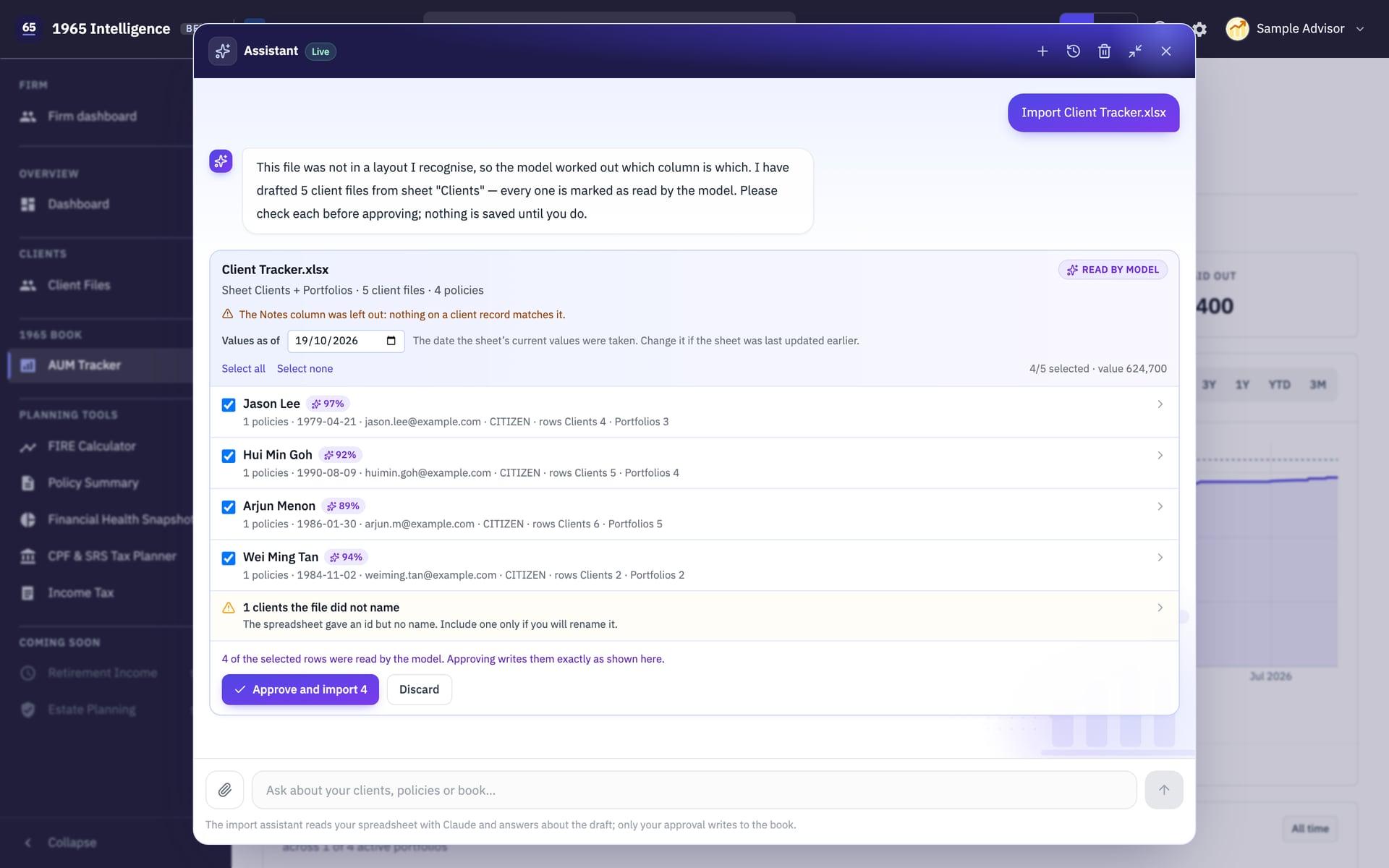
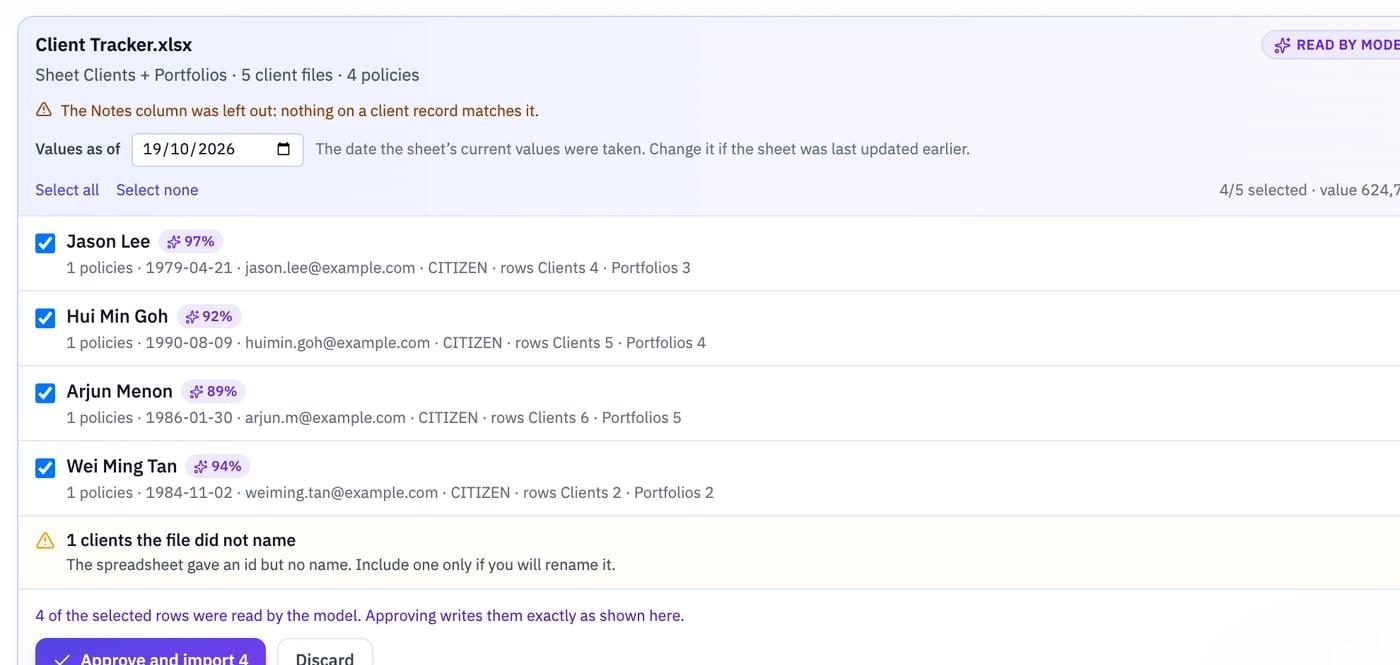
  3. The import review open over the AUM tracker, drafting client files from a spreadsheet
    Draft client files read by the model, each with a confidence score, and a row flagged for having no name

    03 / 08AI import

    Any tracker, imported in minutes

    Problem: Moving to a new platform meant retyping every client by hand.

    Solution: Advisers upload the spreadsheet they already keep. The AI works out which column is which, then the importer reads every row and drafts client files to approve.

    • The model sees column headers, not every client
    • Each row shows how sure the model was
    • A corrected sheet re-imports without losing hand edits
  4. Grounded, then routed

    • Fast modelA term, a definition, a count1× cost
    • Standard modelOrdinary questions about a draft2× cost
    • Deep modelJudgement: mappings, conflicts, client data4× cost

    All three read the same Singapore glossary. When the rule isn't sure, it picks the middle; any hint of judgement goes to the deep model.

    04 / 08AI architecture

    Models that speak Singapore advice

    Problem: General AI misreads a "49L" remark, a Ward A shield plan or CPF OA.

    Solution: Every request carries a Singapore planning glossary. Then a fixed rule sends each question to the model it needs: fast for a term, deep for anything involving judgement.

    • CPF, Integrated Shield, LIA definitions and nominations built in
    • Updated the day a rule changes, with no retraining
    • Every routing decision logged with its reason
  5. US$0.03

    or less per cited answer, measured

    • cachedRepeat questionsAnswered from the cache, free
    • checkedRates, caps and limitsPrinted from the checked-figures table
    • cappedDaily AI spendA ceiling, US$50 a day by default
    • declinedProduct-advice questionsOut of scope by design

    05 / 08AI research

    Answers with sources, or not at all

    Problem: A wrong rate or cap in front of a client is a compliance risk.

    Solution: The Resource Hub answers from a reviewed library. Every sentence is numbered to a source, and figures come from a table a person has checked.

    • Unsourced numbers marked "not verified"
    • Declines "which plan should my client buy"
    • Each firm's library kept apart by the database
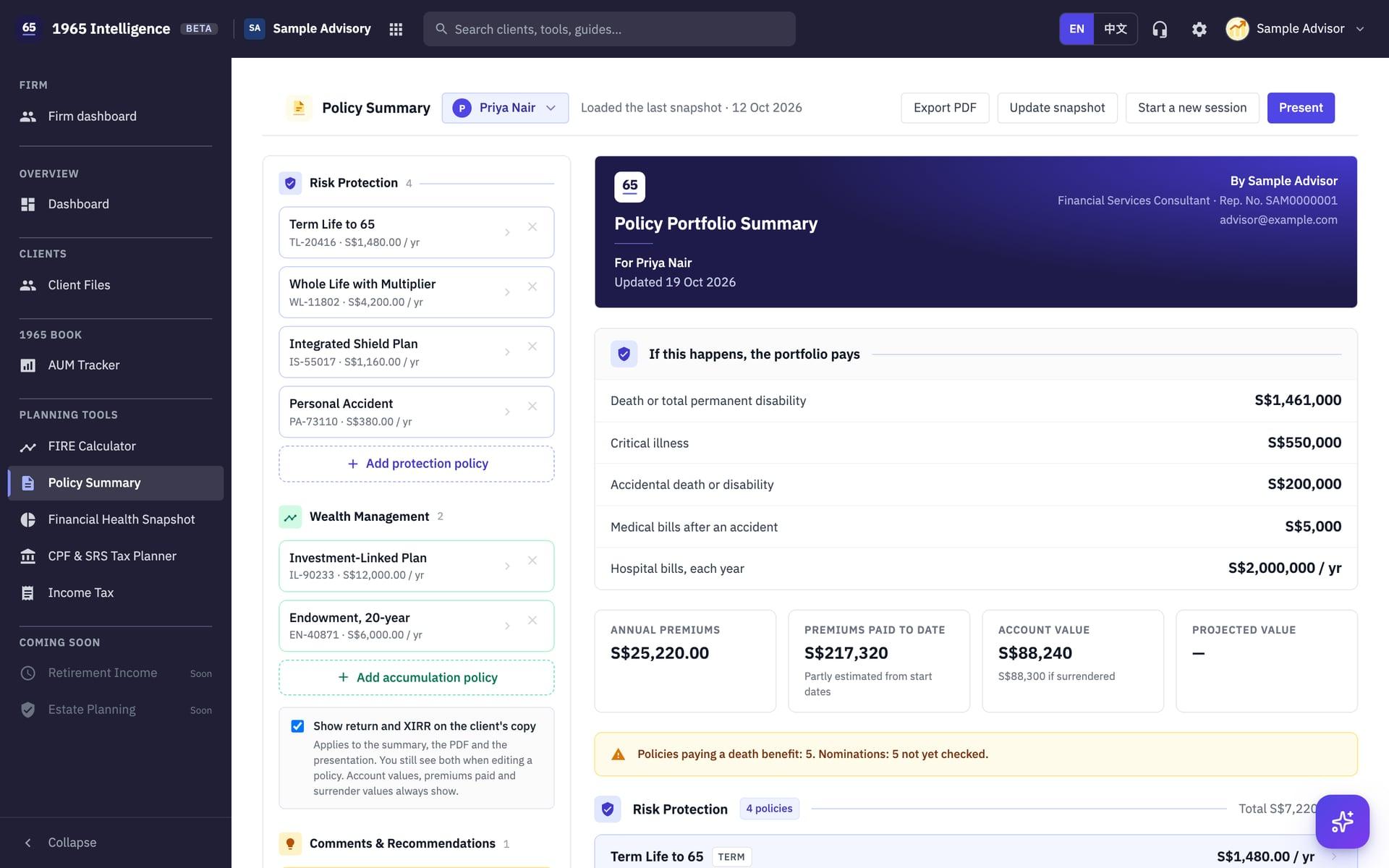
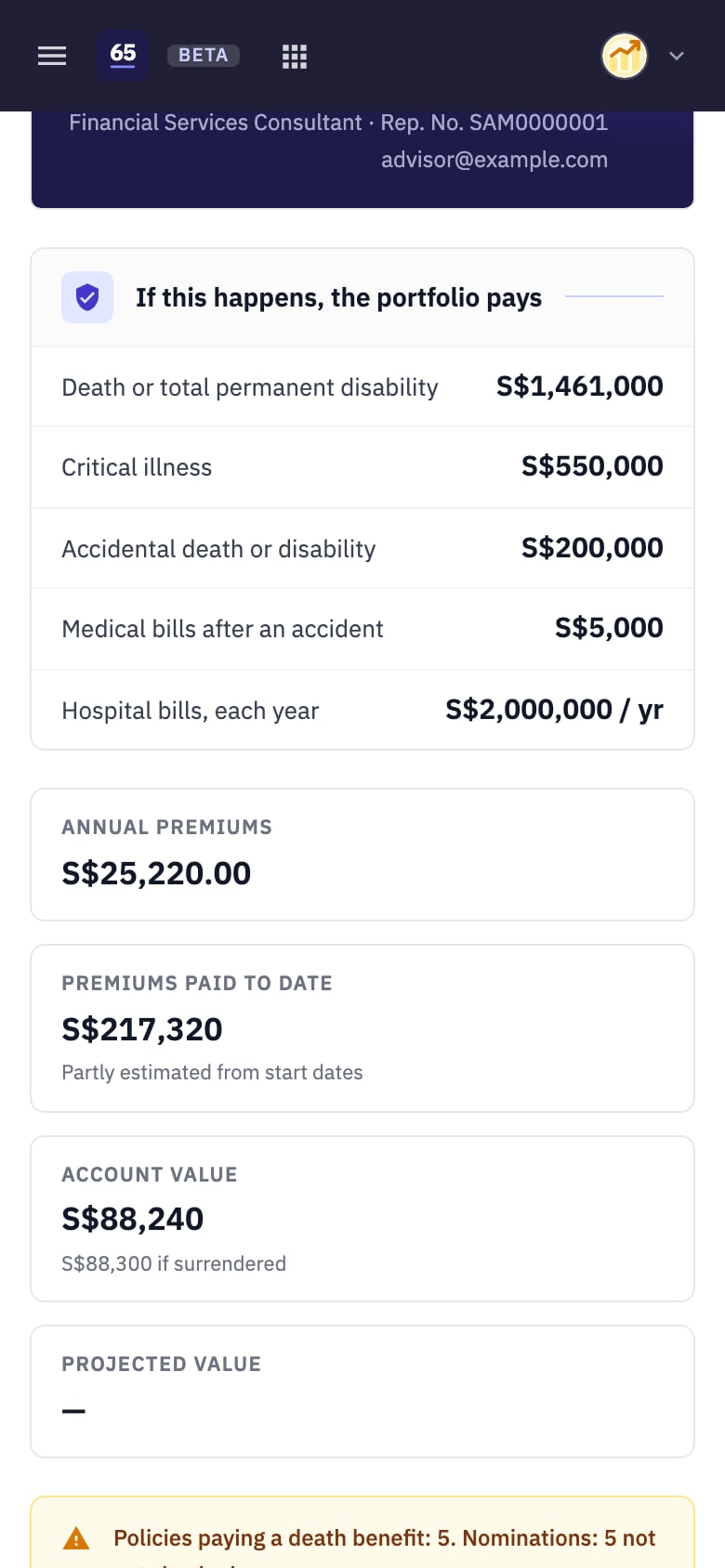
  6. Policy summary for a sample client: cover by event, premiums and account value
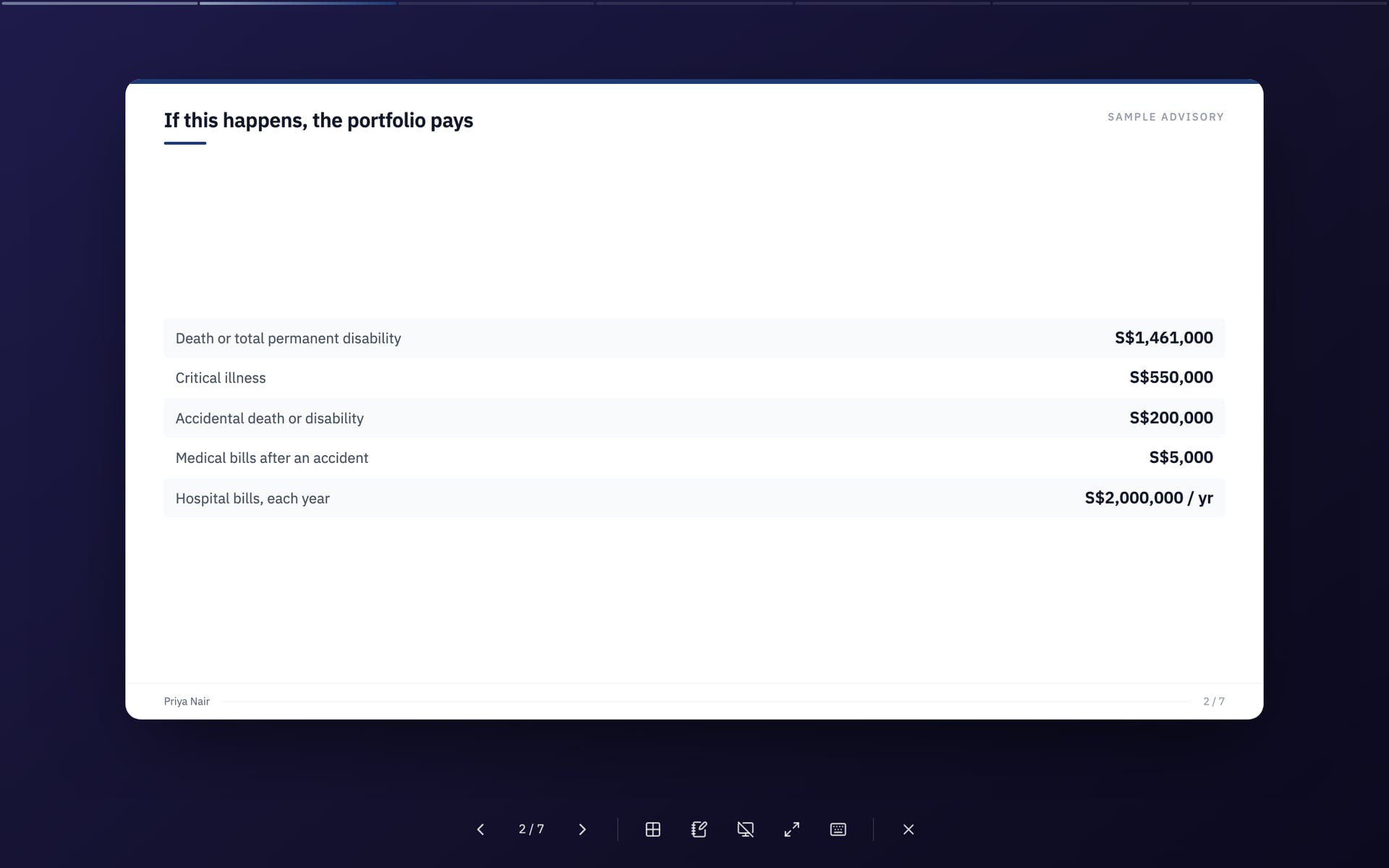
    The same summary in present mode, as a slide of what the portfolio pays

    06 / 08Planning tools

    Policies summarised, then presented

    Problem: A client's policies arrive as PDFs from several insurers, each laid out differently.

    Solution: The AI reads each PDF or sheet into one summary: cover by event and currency, with riders that share a payout flagged. One click turns it into a presentation.

    • A PDF's own totals checked against the rows read
    • Riders that share a payout flagged
    • Every saved version kept
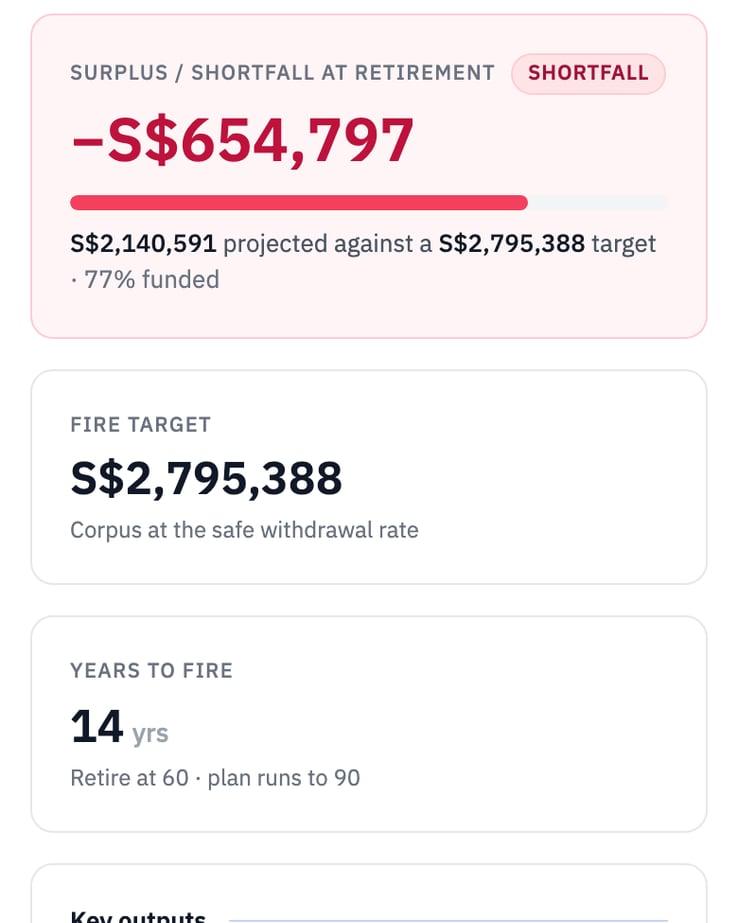
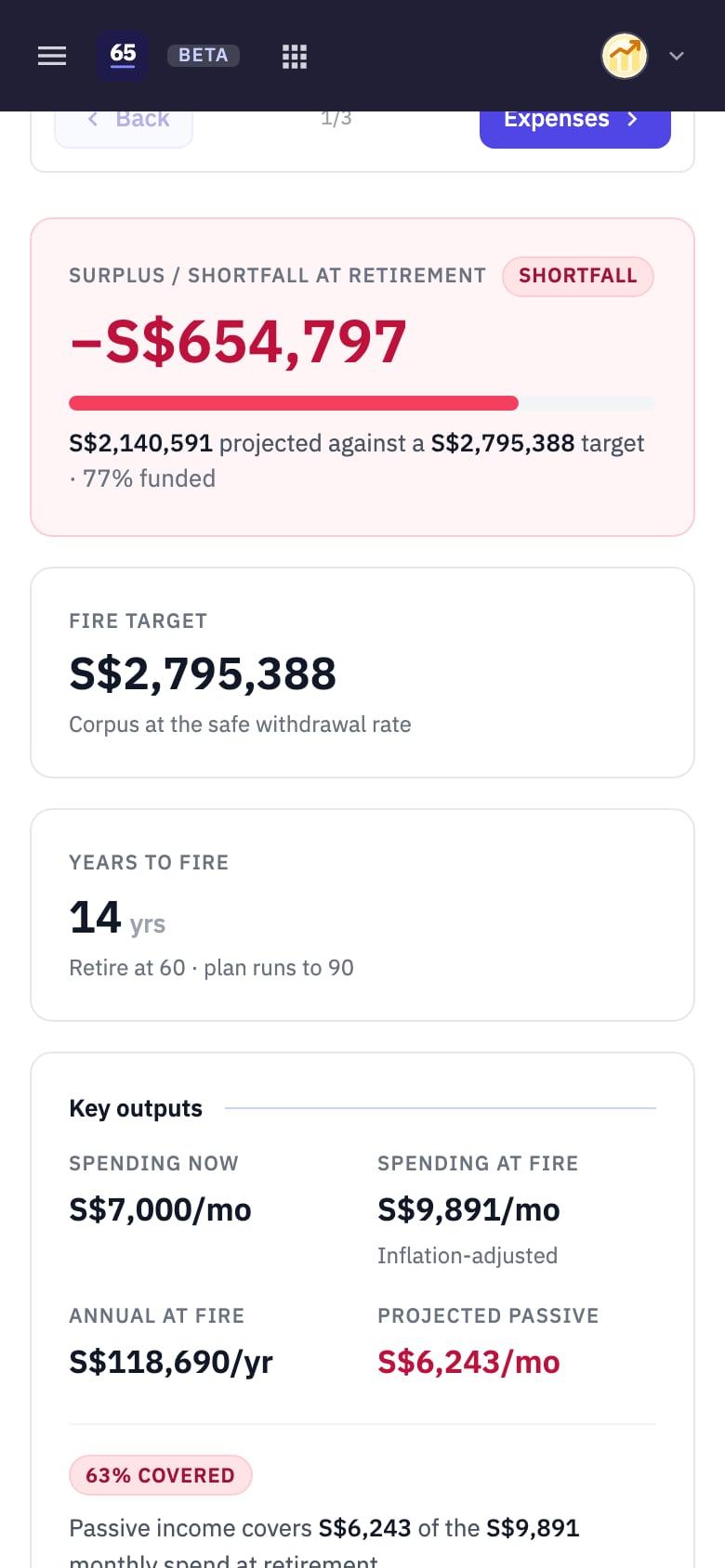
    • FIRE calculator on a phone: shortfall, target and years to retirement

      FIRE plan

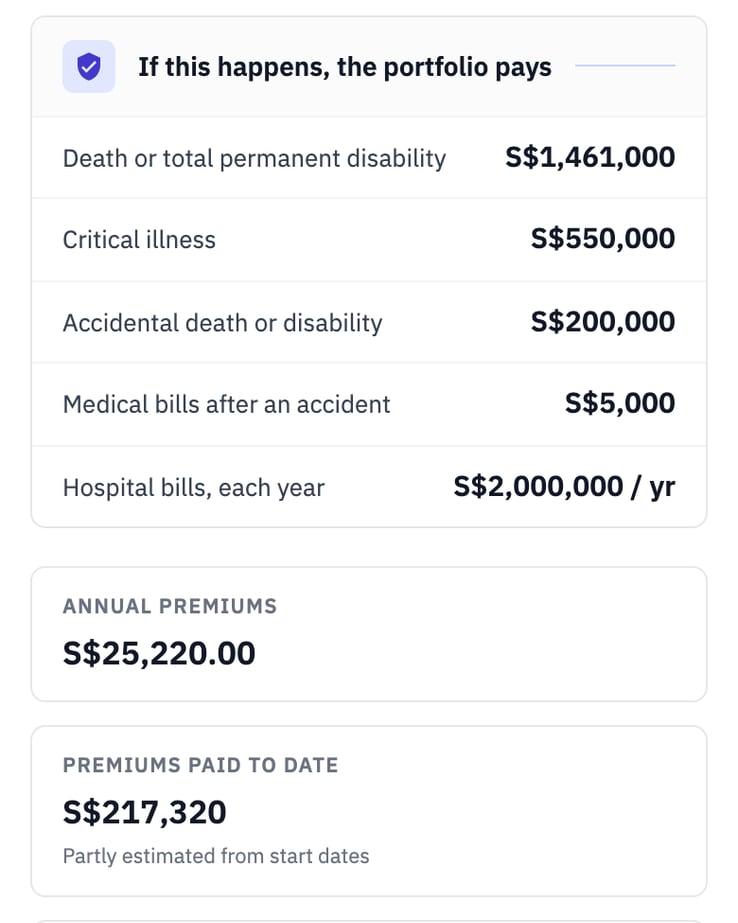
    • Policy summary on a phone: what the portfolio pays by event

      Cover

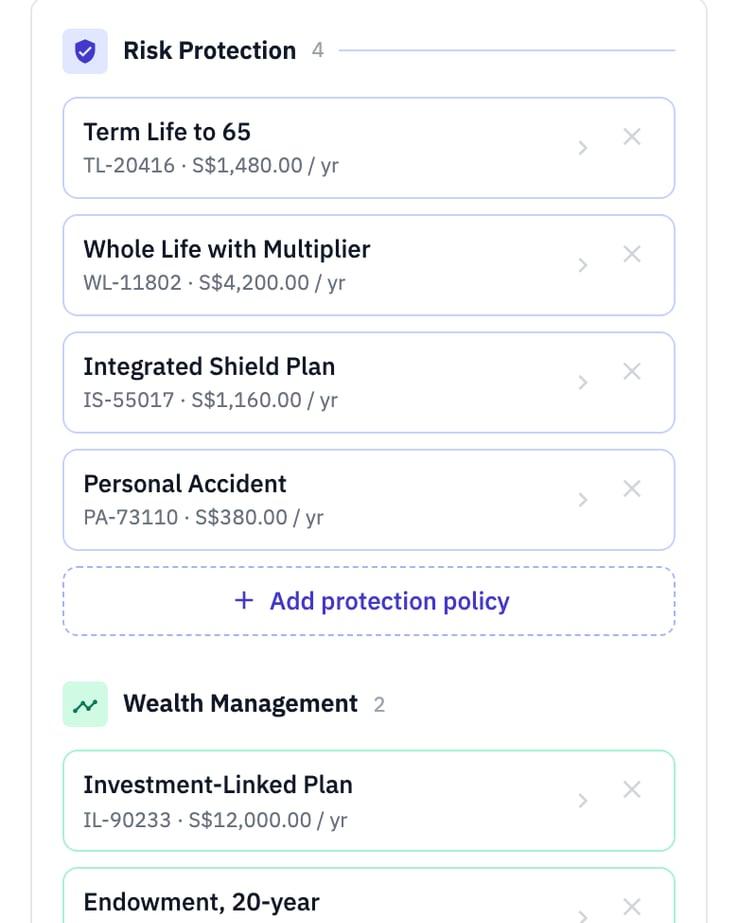
    • A sample client's protection and wealth policies on a phone

      Policies

    07 / 08Planning tools

    Built to be shown, on any screen

    Problem: Advisers present on laptops, tablets and phones, often over a call.

    Solution: Each tool comes down to a few numbers a client can follow, on whatever screen is in front of them.

    • Present mode for a line-by-line walkthrough
    • Export to PDF, PowerPoint or Word
    • English and Chinese throughout
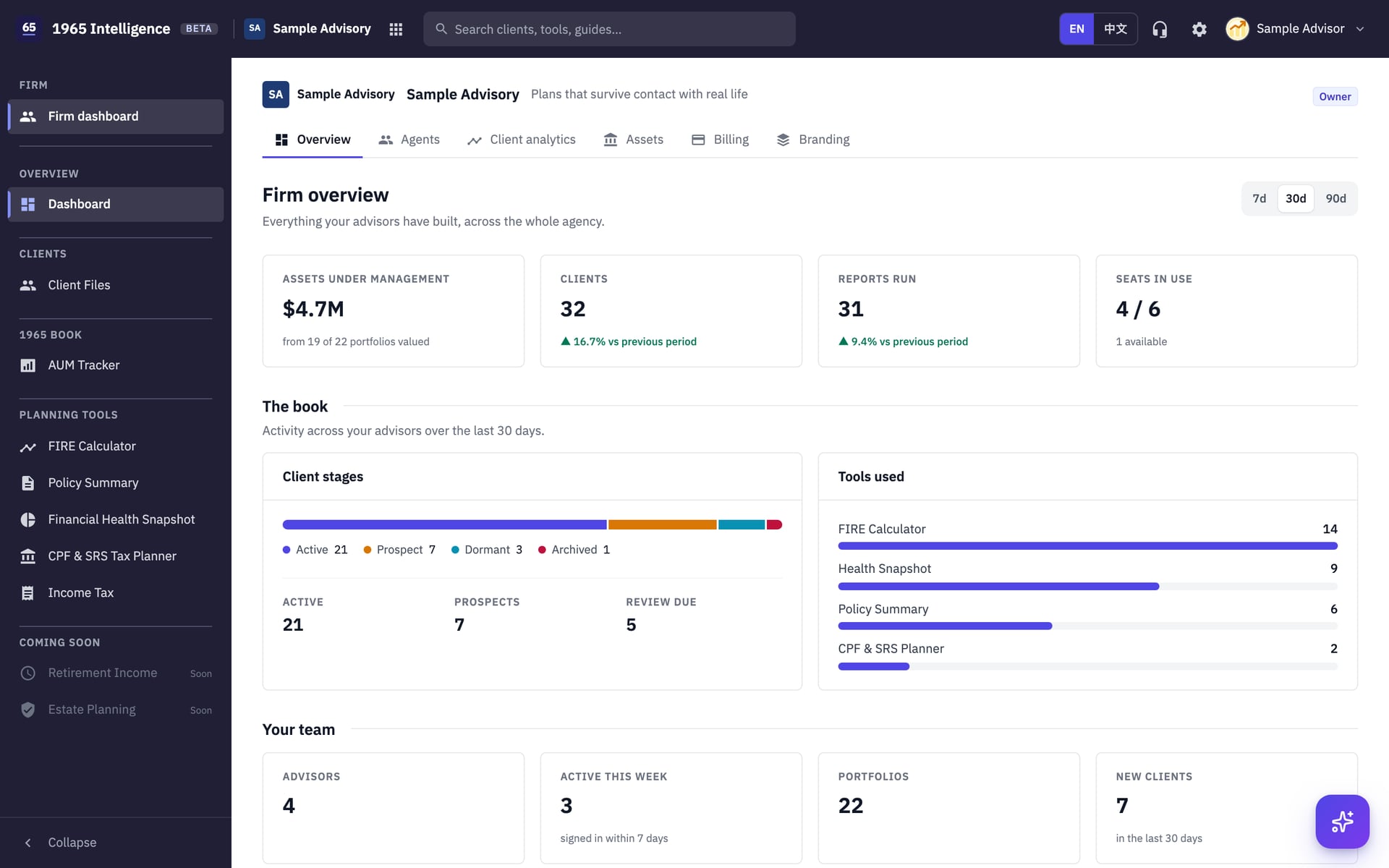
  7. Firm overview for a sample advisory: assets, clients, reports run and seats in use
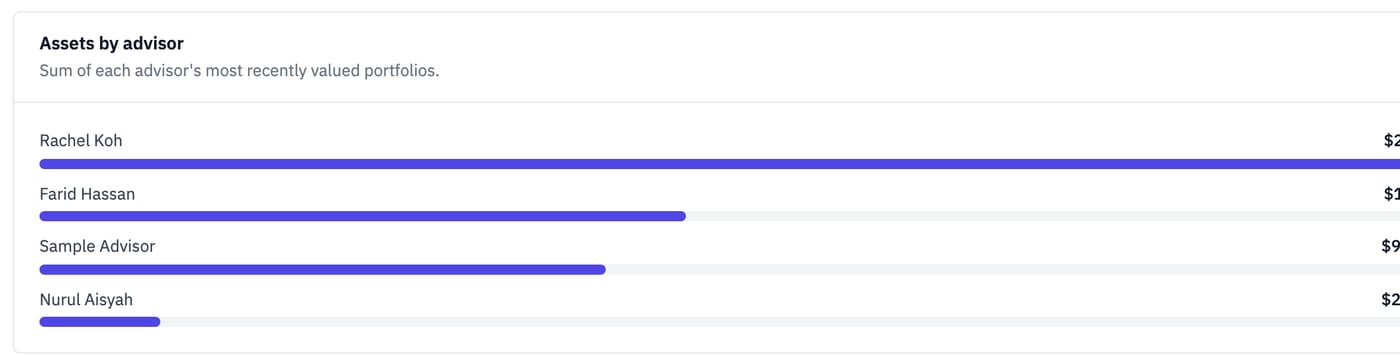
    Assets by adviser for a sample firm

    08 / 08Firms

    One view across the whole firm

    Problem: Firm owners couldn't see all their advisers' clients in one place.

    Solution: The firm dashboard shows assets, clients and activity by adviser, with seats, billing and branding alongside.

    • Assets under management by adviser
    • Firm branding on client reports
    • Each firm's data separated in Postgres

Design decisions

Calls that make AI safe to show a client.

  • Reads run, writes wait

    The assistant can look up any of the adviser's clients. It can't change a thing without a click.

  • The model sees headers, not clients

    To map a spreadsheet, the AI needs the column names, not thirty clients' personal details. Code reads the rows.

  • No figure without a source

    Rates and caps are printed from a table a person checked. If the sources don't say it, the answer says so.

  • Pay for judgement, not lookups

    Simple questions go to the cheapest model. Anything that could put a wrong number on a client file goes to the best one.

Screens from the live product at 1965intelligence.com, filled with invented sample clients. No real client data is shown.

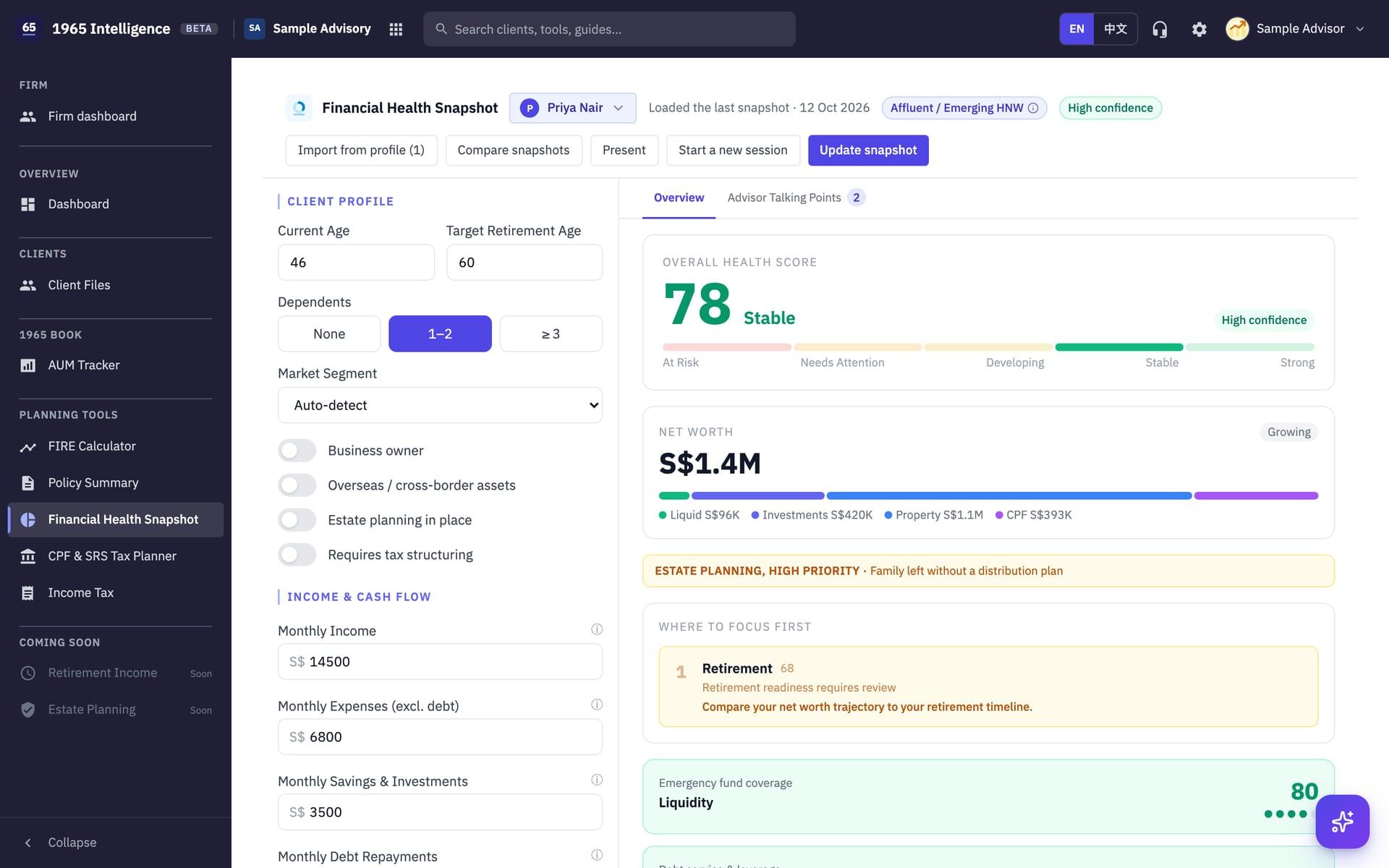
Financial health snapshot for a sample client: score, net worth and where to focus first
FIRE calculator results on a phone
Policy summary on a phone

The result

An AI-native platform advisers present from.

1965 Intelligence is live with six planning tools, an AI assistant for client records and a cited research library, in English and Chinese. Advisers join on a free plan, Pro or a firm seat. We design, build and ship every release.

planning tools live
6
client assets managed by the founding adviser
S$1.5M+
languages, English and Chinese
2
changes made without the adviser's approval
0

What ZENNEX did

  • Product and interface design
  • Web app, API and database
  • AI assistant, import and cited answers
  • Model routing and AI cost controls
  • Firm accounts, billing and branding
  • Releases and support, ongoing

What it runs on

Product
Next.jsReactTypeScriptTailwind CSSPlotly
AI
Anthropic ClaudeSingapore planning groundingModel routingPrompt caching
Backend
Node.jsExpressPrismaPostgreSQL row-level security
Infrastructure
AWS EC2AWS RDSVercelAirwallex

Questions about this project.

What does AI-native mean for an advisers' platform?

The AI is part of how the product works, not a chat box on the side. In 1965 Intelligence, the AI reads client records, maps imported spreadsheets and answers research questions with sources, while every change to a client record still goes through the adviser.

How do you keep client data safe when using AI?

By giving the model as little as it needs. The importer shows the AI column headers and a small sample, not every client's details. Each firm's data is separated in the database itself, and nothing is written to a client file without the adviser's approval.

Is the AI trained on Singapore financial planning?

It is grounded rather than retrained. Every request carries a Singapore planning glossary covering CPF, Integrated Shield plans, the LIA's critical-illness definitions and nomination rules, and figures come from a table a person has checked. When a rule changes, the glossary changes the same day, with no retraining.

Can you build AI software like this for us?

Yes. We build AI products for regulated work, where the model reads real data, shows its sources and leaves the decision to a person. Scope and price are agreed in writing before work starts.

Building AI into sensitive work?

Tell us what the product has to do. We'll tell you how we'd build it, and where the AI should stop and ask.

Step 1 of 3 · Your details

+65

By tapping Next you agree to our Terms of Service and Privacy Policy, and to us contacting you by email, phone or WhatsApp about your enquiry.

Or reach us directly: email, WhatsApp or call +65 9861 0083.